Ashwagandha Extract Market Is Growing as Consumers Embrace Natural Wellness
In recent years, more people have started paying attention to their health, sleep quality, and overall well-being. Along with this shift, interest in herbal products and traditional wellness ingredients has increased. One ingredient receiving growing attention is ashwagandha, a herb widely used in Ayurveda and other traditional wellness practices.
Ashwagandha extract is obtained from the ashwagandha plant and is commonly used in dietary supplements, herbal formulations, and functional food and beverage products. Its growing popularity is creating new opportunities for manufacturers as consumers explore products that fit their health and lifestyle preferences.
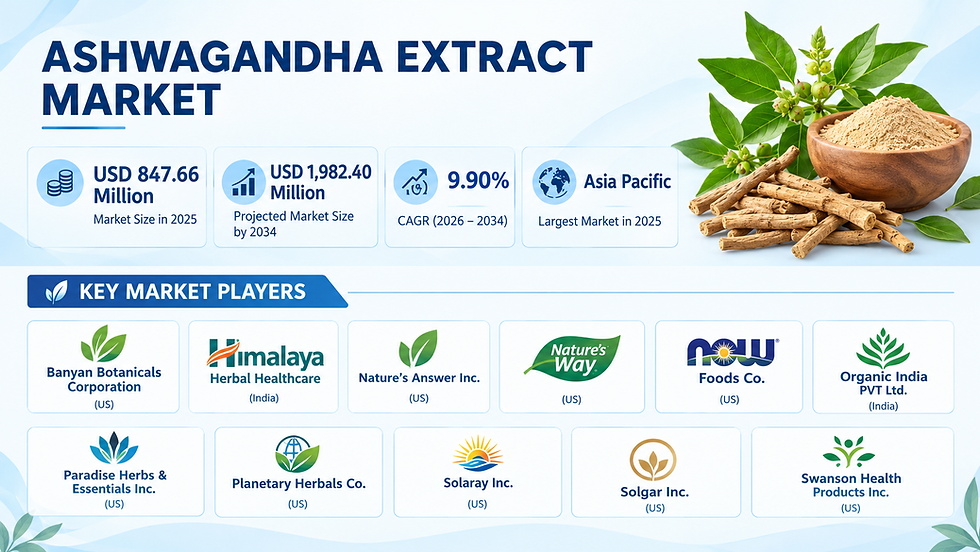
According to Polaris Market Research, the global ashwagandha extract market was valued at USD 847.66 million in 2025. It is projected to reach USD 1,982.40 million by 2034, growing at a compound annual growth rate (CAGR) of 9.9% from 2026 to 2034.
Rising Interest in Stress Management and Wellness
Modern lifestyles can be demanding, with work pressure, busy schedules, and limited time for rest affecting people's daily routines. As a result, consumers are increasingly exploring wellness products that support relaxation and healthy sleep habits.
Ashwagandha has traditionally been associated with stress management and general wellness. Growing research into its potential effects is also attracting attention from consumers, supplement brands, and product developers.
This interest is encouraging companies to introduce new formulations designed for different consumer needs. However, the effectiveness and safety of ashwagandha can vary depending on the extract, dosage, and individual circumstances. Its use should not be considered a replacement for professional medical care.
Dietary Supplements Are Supporting Market Growth
Dietary supplements represent an important application area for ashwagandha extract. Consumers can find it in capsules, tablets, powders, and other formulations, making it accessible through different product categories.
According to Polaris Market Research, dietary supplements accounted for a significant share of market revenue in 2025. Growing interest in herbal wellness products and the introduction of new supplement formulations are helping support demand.
Manufacturers are also focusing on product quality, ingredient sourcing, and convenient formats. Clear labeling and reliable quality standards can help consumers make more informed purchasing decisions.
Powder and Capsule Formats Offer Convenience
Ashwagandha extract is available in several forms, including powders, capsules, tablets, and liquids. Each format offers different advantages depending on how the product is intended to be used.
The powder segment held the largest market share in 2025. Powdered extracts can be incorporated into supplement blends, smoothies, and other formulations, giving manufacturers flexibility when developing new products.
Meanwhile, capsules and tablets are expected to grow at a faster rate during the forecast period. Their convenience and measured serving sizes make them attractive to consumers who prefer simple supplement routines.
Browse In-depth Market Research Report:
Asia Pacific Leads the Market
Asia Pacific accounted for the largest share of the global ashwagandha extract market in 2025. The region benefits from a long history of traditional herbal practices, particularly in countries such as India, where ashwagandha has been used in Ayurveda for generations.
Growing interest in herbal supplements and the availability of established traditional medicine systems are supporting demand across the region.
North America is also an important market and is expected to experience strong growth. Increasing consumer interest in natural wellness products and supplements designed around stress management and sleep are creating opportunities for manufacturers.
Innovation Is Creating New Opportunities
As demand increases, companies are exploring new ways to improve ashwagandha extract products. These efforts include developing different extract concentrations, improving formulation quality, and introducing convenient products for everyday use.
Ashwagandha is also finding applications in functional beverages, herbal teas, protein powders, and other food and beverage products. These developments allow companies to reach consumers beyond the traditional dietary supplement category.
At the same time, manufacturers must address challenges such as product consistency, raw material quality, consumer awareness, and regulatory requirements. Responsible sourcing and transparent product information will remain important for building consumer trust.
Conclusion
The ashwagandha extract market is gaining momentum as consumers show greater interest in herbal wellness and convenient supplement products. Demand for dietary supplements, new product formats, and expanding applications is creating opportunities across the industry.
With the market projected to approach USD 1.98 billion by 2034, innovation and product quality will be important factors shaping its future. Companies that respond to consumer needs while maintaining responsible sourcing, safety standards, and clear communication may be well positioned to benefit from this growing market.
More Trending Latest Reports By Polaris Market Research:


Comments