Wearable Medical Device Market Size, Share, Trends, and Growth Forecast
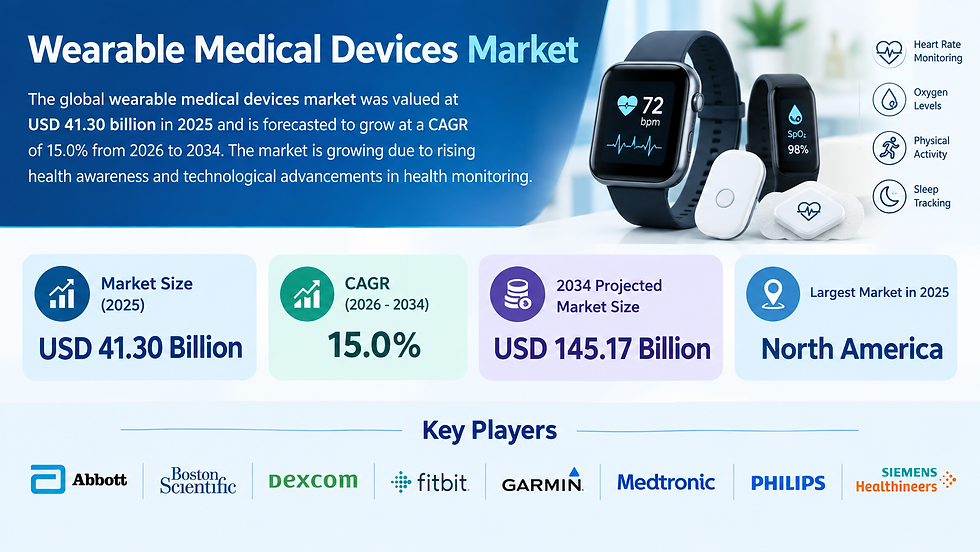
Valued at USD 41.30 billion in 2025, the wearable medical device market is projected to reach USD 47.42 billion in 2026 and USD 145.17 billion by 2034, growing at a CAGR of 15.0% during the forecast period 2026–2034. Rising health awareness and technological advancements in health monitoring underpin this trajectory, supported by the increasing prevalence of chronic diseases. Key players include Apple Inc., Fitbit, Inc., Garmin, Google, Medtronic, Koninklijke Philips N.V., and Samsung.
What Defines the Wearable Medical Device Market
Wearable medical devices are compact electronic devices worn on the body as clothes or accessories to monitor and gather health-related data. Their sensors track sleep patterns, physical activity, and vital indicators, supporting wellness tracking, illness management, and personal health monitoring. Patients with chronic diseases depend on them for real-time vitals monitoring and prompt action when abnormalities occur, while physicians can remotely observe patient activity, reducing needless hospital visits and healthcare costs. Companies are engaged in product development, partnerships, and strategic collaborations to enhance the technology further.
Browse Insights:
Chronic Disease Burden Fuels Adoption
The incidence and prevalence of chronic diseases have increased as a result of sedentary lifestyles combined with unhealthful dietary practices. The report also notes that many COVID-19 survivors now have long COVID, which highlights the need for ongoing patient monitoring, and that demand for pulse oximeters in home healthcare spiked during the pandemic. Growing health consciousness has increased demand for smartwatches that measure vital signs to track fitness and health progress. Conversely, data privacy and security concerns remain the principal restraint on market growth.
Diagnostic Devices Hold the Largest Share
By device type, the market is segmented into diagnostic and therapeutic devices. In 2025, diagnostic devices accounted for the largest revenue share at 32.0%. The introduction of wearable blood glucose monitors and pulse oximeters boosts this dominance, as new devices with cutting-edge capabilities monitor health-related issues and speed up diagnosis for medical professionals. Consumers' desire to take charge of their health is also driving use of wrist wearables such as fitness trackers, smartwatches, and medical monitors. The report states that wearable blood glucose monitors and pulse oximeters are gaining significant traction in healthcare, reinforcing the strength of diagnostic devices.
Remote Patient Monitoring Leads Application Growth
By application, the market is segmented into remote patient monitoring, home healthcare, and sports and fitness. The remote patient monitoring segment is expected to register the fastest growth during 2026–2034, at a CAGR of 15.0%, supported by increasing adoption of continuous monitoring solutions and rising demand for home-based care. The sports and fitness segment held the largest revenue share in 2025 at 21.0%, as rising awareness among athletes and fitness enthusiasts and growing purchasing power propel demand.
Regional Insights and Competitive Landscape
North America dominated with a 40.0% share in 2025, driven by the prevalence of chronic diseases and the rising number of new players with advanced technology. A 2019 Pew Research Center survey cited in the report found that 21% of U.S. adults regularly use a fitness band or Wearable medical devices fitness tracker, and 41% of respondents accept fitness tracker manufacturers sharing user information with medical professionals to better understand the relationship between exercise and heart disease. A substantial share of the population in the United States and Canada comprises early adopters. Asia Pacific is projected to grow fastest at a CAGR of 16.1%, supported by government initiatives, a rising geriatric population, and advanced device development in Japan.
The competitive landscape is intense, with players relying on research and development, mergers and acquisitions, and technological innovation. Other participants include AiQ Smart Clothing, NeuroMetrix, Inc., OMRON healthcare, Inc., Royal Philips, Sonova, and Ypsomed. In July 2025, Samsung Electronics acquired Xealth to integrate wearable-generated wellness data into clinical workflows, and in April 2026 RhythmMedix introduced RhythmStar, a wearable cardiac monitoring device with ECG-based tracking.
More Trending Latest Reports By Polaris Market Research:
Comments